UV transfer printing process, also known as UV infusion process or UV coating process, is an advanced surface decoration technology that utilizes the UV curing properties to achieve pattern transfer. The core principle is to use UV transfer adhesive to solidify from liquid to solid under UV irradiation, and to fully replicate the texture or pattern on the mold onto the surface of the plastic sheet, forming a high-precision and wear-resistant decorative effect.
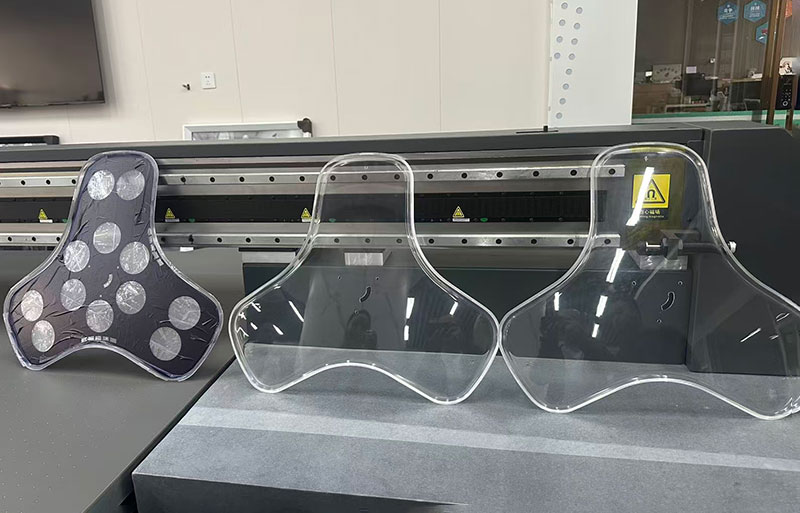
The UV transfer printing process is as follows:
- Mold opening
Using precision techniques such as laser engraving, the required textures (such as CD patterns, brushed patterns, matte, glossy, etc.) are processed on the mold, and positioning columns and ink positioning holes are designed to ensure transfer accuracy.
- Transfer printing
Apply UV transfer adhesive evenly onto the textured surface of the mold through screen printing, precisely control the amount of adhesive used, and avoid bubbles or sagging.
- Compression
Place the selected plastic sheet (such as PC, PET, PMMA) on the transfer mold, use a glue stick or other equipment to press the sheet tightly, so that the UV glue is tightly adhered to the film, ensuring that the texture is completely filled into the film.
- Optical fixation
Place the sheet and mold into the light curing machine and irradiate them with a specific wavelength ultraviolet lamp. Under the action of ultraviolet light, UV glue quickly solidifies, transferring the texture on the mold to the sheet.
- Demoulding
After curing is completed, the sheet is peeled off from the mold, and the texture on the mold has been fully replicated onto the surface of the sheet, forming a decorative layer with a three-dimensional effect.
Compared to IML in mold transfer printing, UV transfer printing significantly reduces the product scrap rate.