
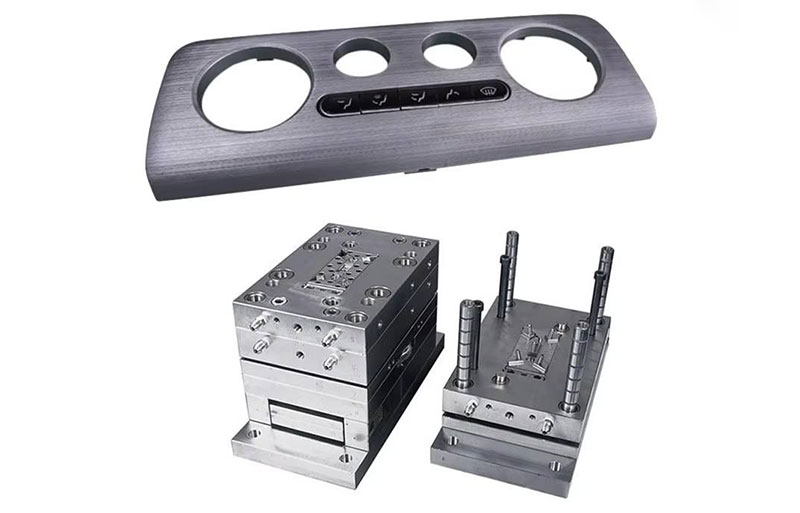
Injection molding is a critical process for converting plastic raw materials into a wide range of plastic products. Product quality directly impacts the performance, safety, and service life of end products, while also influencing an enterprise’s market competitiveness and economic benefits. The quality of injection-molded products is jointly affected by multiple factors including raw materials, equipment, processes, molds, the environment, and personnel. Deviations in any link may lead to defects such as short shots, flash, warpage, bubbles, and cracks. From a full-process control perspective, this article systematically elaborates on the core points and practical methods for ensuring product quality in injection molding.
I. Source Control: Precision Management of Raw Materials
Raw materials form the foundation of injection-molded product quality. Only by ensuring that raw materials meet molding requirements can quality risks be minimized at the source. Raw material management must cover the entire chain of “selection – inspection – storage – preprocessing”.
(1) Scientific Material Selection to Match Product Requirements
Select suitable plastic raw materials based on the product’s application scenario, performance requirements (e.g., strength, heat resistance, corrosion resistance, transparency), appearance standards, and molding process characteristics. For example:
- High-impact ABS materials are ideal for home appliance casings;
- Food-grade PP or PE materials must be used for food-contact products;
- PC materials with excellent dimensional stability are suitable for high-precision electronic component housings.
Additionally, verify that the material model and grade align with design specifications to prevent substandard product performance due to material mismatch.
(2) Strict Incoming Inspection to Reject Non-Conforming Raw Materials
Establish a robust incoming inspection system for raw materials, conducting sampling tests on each batch of incoming materials. Core inspection items include:
- Appearance quality: Check for clumping, impurities, discoloration, and excessive dust;
- Key performance indicators: Use testing equipment to verify melt index (MI), density, tensile strength, and impact strength to ensure compliance with material standards;
- Batch consistency: Cross-check production batch numbers, manufacturing dates, and quality certificates to avoid mixing different batches or grades of materials.
Non-conforming materials must be promptly isolated and returned to suppliers, with strict prohibition on their entry into the production process.
(3) Standardized Storage and Preprocessing to Ensure Material Stability
The storage environment directly affects raw material performance, requiring strict control over storage conditions:
- Moisture protection: Hygroscopic plastics (e.g., PA, PET, PC, ABS) should be stored in dry, well-ventilated warehouses to prevent moisture absorption, which can cause bubbles and silver streaks in finished products;
- Sunlight and high-temperature protection: Avoid prolonged exposure to sunlight or high temperatures to prevent degradation and aging;
- Classified storage: Different grades and types of materials must be stored separately with clear labels to prevent confusion.
Furthermore, hygroscopic plastics must undergo drying preprocessing before molding, with parameters set according to material characteristics:
- PA materials typically require drying at 80–100°C for 4–6 hours;
- PC materials need drying at 120–140°C for 2–4 hours.
Dried materials should be used immediately to avoid reabsorbing moisture.
II. Core Guarantee: Precision Commissioning and Maintenance of Equipment
Injection molding machines and auxiliary equipment (e.g., dryers, mold temperature controllers, chillers) are the core carriers of the injection molding process. The stability and precision of their operation directly determine product quality. Equipment management must focus on “commissioning – maintenance – calibration”.
(1) Precision Pre-Startup Commissioning to Ensure Parameter Matching
Before startup, fully commission the injection molding machine based on product design requirements and raw material characteristics:
- Barrel temperature commissioning: Set segmented temperatures for the feeding, compression, and homogenization zones within the material’s molding temperature range to ensure uniform heating, preventing material degradation (excessively high temperature) or insufficient melting (excessively low temperature);
- Nozzle temperature commissioning: The nozzle temperature should be slightly higher than the barrel’s homogenization zone to prevent melt solidification, while avoiding drooling due to excessively high temperatures;
- Clamping force commissioning: Set appropriate clamping force based on mold size and product projected area. Insufficient force causes flash, while excessive force increases equipment load and shortens mold life;
- Ejection system commissioning: Ensure stable ejection speed and precise stroke to prevent product deformation or scratching caused by uneven force or excessive speed.
Simultaneously, inspect the operation status of auxiliary equipment: confirm that dryer temperature and time meet material requirements, mold temperature controllers maintain stable temperatures, and chiller water temperatures are up to standard, ensuring coordinated operation with the injection molding machine.
(2) Regular Maintenance to Ensure Equipment Stability
Establish a regular maintenance system to prevent precision degradation due to wear and aging:
- Maintenance of core injection machine components: Periodically inspect screw and barrel wear, replacing severely worn parts to avoid affecting melt conveyance and plasticization quality; check hydraulic system pressure stability, replenish hydraulic oil, and replace aging seals to prevent oil leaks and pressure fluctuations; lubricate guide mechanisms (guide pillars and bushings) regularly to ensure smooth mold opening and closing;
- Maintenance of auxiliary equipment: Clean dryer filters and hoppers regularly, and inspect heater tube efficiency; clear mold temperature controller pipelines to prevent scale buildup that impairs temperature control precision; check chiller condensers and evaporators to ensure stable cooling performance.
(3) Regular Calibration to Maintain Equipment Precision
Annually calibrate key precision indicators of injection molding machines, including clamping precision, shot volume precision, temperature control precision, and pressure control precision. Equipment with failed calibration must be repaired or have parts replaced promptly to avoid product quality fluctuations caused by precision deviations.
III. Critical Link: Optimization and Control of Molding Processes
The injection molding process is the core of converting raw materials into qualified products. The matching of process parameters—such as injection speed, injection pressure, holding pressure, holding time, and cooling time—directly impacts melt filling and solidification quality. Precision parameter control must be achieved through process optimization.
(1) Optimization of Injection Parameters to Ensure Uniform Filling
Injection speed and pressure are critical to melt filling quality:
- Excessively high injection speed causes turbulent flow in the mold cavity, trapping air and forming bubbles and burn marks;
- Excessively low speed reduces melt fluidity, leading to short shots and prominent weld lines.
Adjust injection speed based on product structure: use high-speed injection for thin-walled or complex cavity products to ensure rapid filling, and low-speed injection for thick-walled products to prevent bubble formation.
Injection pressure must be coordinated with injection speed to ensure the melt can overcome cavity resistance and fill all corners. Insufficient pressure causes short shots, while excessive pressure increases internal stress, leading to cracks and warpage.
(2) Optimization of Holding Pressure Parameters to Improve Dimensional Stability
The primary role of the holding phase is to compensate for volume shrinkage during melt cooling, ensuring precise product dimensions. Holding pressure and time must be set rationally:
- Holding pressure is typically 50%–80% of injection pressure. Excessively high pressure causes internal stress, while insufficient pressure fails to compensate for shrinkage, resulting in sink marks and voids;
- Holding time should be adjusted based on product thickness: extend time for thick-walled products to ensure sufficient compensation, and shorten time appropriately for thin-walled products to avoid reducing production efficiency.
(3) Optimization of Cooling Parameters to Avoid Deformation Defects
The cooling phase is critical for melt solidification. Cooling rate and uniformity directly impact product dimensional stability and appearance quality. Set reasonable cooling time and mold temperature based on raw material characteristics and product structure:
- Insufficient cooling time results in incomplete solidification, causing post-demolding deformation;
- Excessively long cooling time extends production cycles and increases costs.
For crystalline plastics (e.g., PA, POM), increase mold temperature to promote uniform crystallization and reduce internal stress. For amorphous plastics (e.g., PS, ABS), lower mold temperature appropriately to accelerate cooling and solidification.
Additionally, ensure the cooling system operates smoothly by regularly cleaning scale from cooling channels to eliminate cooling dead zones, ensuring uniform mold temperature and reducing warpage and deformation caused by uneven cooling.
IV. Basic Support: Maintenance and Optimization of Molds
Molds act as the “forming templates” for plastic products. Their precision, surface quality, exhaust performance, and demolding structure directly impact product quality. Daily maintenance and regular optimization of molds are essential.
(1) Daily Maintenance to Ensure Stable Mold Performance
Conduct a comprehensive mold inspection before each startup:
- Cleanliness: Clean mold cavities and cores to remove residual plastic debris and oil, preventing appearance defects;
- Moving parts inspection: Check the operation of guide mechanisms (guide pillars, bushings), ejection systems (ejector pins, sleeves), and core-pulling mechanisms to ensure smooth movement without jamming or wear, applying lubricant regularly;
- Sealing performance inspection: Inspect parting surfaces and sprue bushings for wear or deformation to prevent flash during molding;
- Cooling and exhaust system inspection: Ensure cooling channels and exhaust slots are unobstructed by removing debris, guaranteeing effective cooling and exhaust.
(2) Regular Optimization to Enhance Mold Adaptability
Optimize molds targetedly based on quality issues encountered during production:
- Flash defects: Inspect parting surface fit and repair wear through grinding if necessary;
- Bubbles or short shots: Check for insufficient exhaust slots and expand their size or add additional vents if needed;
- Warpage or deformation: Optimize the mold cooling system by adding cooling channels or adopting conformal cooling structures to ensure uniform cooling;
- Demolding difficulties or scratching: Optimize the ejection system by adjusting ejector pin positions and quantity for uniform force distribution, or polish cavity surfaces.
V. Process Control: Full-Process Inspection and Quality Traceability
Establish a full-process quality inspection mechanism to identify quality risks promptly, while implementing robust quality traceability to ensure issues are traceable and correctable.
(1) First Article Inspection: Building the First Line of Quality Defense
Conduct first article inspection after each production batch startup, mold change, or process adjustment. Inspection items include:
- Product appearance: Absence of short shots, flash, bubbles, scratches, or other defects;
- Dimensional accuracy: Measurement of critical dimensions using calipers, micrometers, projectors, etc., to ensure compliance with drawings;
- Performance indicators: Sampling tests for tensile strength, impact strength, and other properties as required by product specifications.
Mass production can only commence after first article inspection is passed. If failed, re-adjust the process or mold before re-inspection.
(2) In-Process Inspection: Identifying Quality Fluctuations Timely
Arrange dedicated personnel to conduct regular in-process inspections during mass production. The inspection frequency is determined by production batch size and product complexity (typically every 1–2 hours). Inspection content includes:
- Product appearance quality;
- Stability of critical dimensions;
- Normal operation of equipment parameters;
- Stability of raw material supply.
If quality abnormalities are detected, stop production immediately to investigate the cause. After adjustments, perform first article inspection again before resuming production.
(3) Finished Product Inspection and Traceability: Ensuring Controllable Quality
Before warehousing, conduct final inspection of finished products, comprehensively testing appearance, dimensions, and performance to reject non-conforming items. Simultaneously, establish a robust quality traceability system to record information for each product batch, including production time, equipment number, raw material batch, operator, and inspection results. In the event of subsequent quality issues, the root cause can be quickly traced and corrective measures implemented promptly.
VI. Auxiliary Guarantee: Environmental Control and Personnel Training
The production environment and the professional competence of operators are also important factors affecting product quality, requiring targeted management.
(1) Standardized Production Environment: Reducing Environmental Interference
The injection molding workshop should be kept clean, dry, and well-ventilated, with controlled temperature and humidity:
- Temperature: 20–30°C;
- Humidity: 40%–60%.
This prevents moisture absorption by raw materials and instability in equipment operation due to environmental fluctuations. Avoid dust and oil contamination of raw materials and molds, especially for high-precision or high-appearance products, where a clean production area should be established.
(2) Strengthened Personnel Training: Improving Operational Skills
The professional competence of operators directly impacts process control effectiveness. Conduct regular training covering:
- Raw material characteristics and preprocessing requirements;
- Equipment operation specifications;
- Process parameter adjustment methods;
- Quality defect identification and resolution;
- Mold maintenance essentials.
Additionally, establish a post responsibility system to clarify quality responsibilities for each role, ensuring operators strictly follow procedures and reduce quality issues caused by human error.
VII. Conclusion
Ensuring product quality in injection molding is a systematic project that must cover the entire process of “raw materials – equipment – processes – molds – inspection – environment – personnel”. Through scientific management measures, precise parameter optimization, comprehensive inspection mechanisms, and standardized operating procedures, synergistic efforts across all links can be achieved. Enterprises must uphold a quality philosophy of “full staff participation and full-process control”, continuously optimize production management systems, and leverage new technologies (e.g., CAE simulation analysis, intelligent inspection equipment) to enhance quality control capabilities. Only in this way can enterprises consistently produce high-quality injection-molded products that meet requirements and gain a competitive edge in the market.