
Injection molding is a highly efficient mass-production process for plastic parts. It involves injecting molten plastic into a custom-made mold and then cooling and solidifying it to obtain the final product. With the ability to produce complex geometric parts with high precision and consistency, this process is widely applied across multiple industries. However, it is not a one-size-fits-all solution, and it is crucial to understand its suitable scenarios and limitations.
I. Ideal Application Scenarios for Injection Molding
1. High-Volume Production Requirements
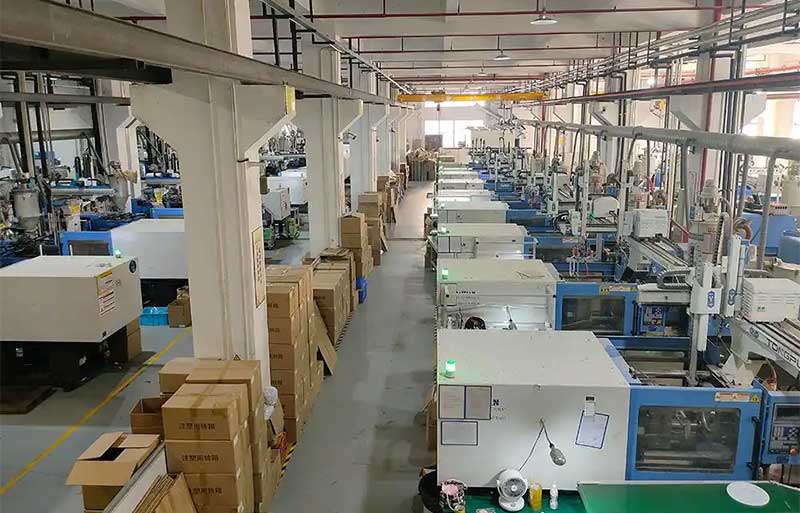
Injection molding is extremely well-suited for large-scale production where thousands or even millions of identical parts are needed. Although the upfront cost of mold making is relatively high, once the mold is completed and put into use, the cost per unit product drops significantly. Therefore, it is highly cost-effective for mass manufacturing. For example, products with extremely high demand such as mobile phone cases and beverage bottle caps can significantly reduce long-term production costs by using injection molding.
2. Complex Part Design with High Precision Requirements
If a part has a complex design, undercuts, or strict tolerance requirements, injection molding is a suitable choice. This process can produce parts with rich details, complex structures, and stable quality, making it applicable in industries with high precision requirements such as automotive, electronics, and medical equipment. For instance, medical syringe components and automotive dashboard parts are often manufactured through injection molding. Its precise dimensional control and ability to realize complex structures can meet the stringent standards in these fields.
3. Demand for Material Diversity
Injection molding can be compatible with a wide range of materials, including high-performance thermoplastics such as ABS, polycarbonate, and nylon. These materials possess characteristics like impact resistance, high-temperature resistance, and chemical corrosion resistance, making them suitable for scenarios with high requirements for durability and functionality. For example, in the plastic components of chemical equipment, using chemical-resistant materials formed through injection molding can ensure the long-term stable operation of the components.
4. Pursuit of Long-Term Cost-Effectiveness
Although the initial mold cost for injection molding is high, these costs are amortized over the mold’s service life. Especially in high-volume production, once the mold is made, the production cost of each subsequent part is relatively low. Therefore, it becomes the preferred process for long-term, large-volume projects. For products planned for long-term production, the overall cost advantage of injection molding becomes more pronounced as the production volume increases.
II. Scenarios Where Injection Molding May Not Be the Best Choice
Despite its numerous advantages, injection molding is not the optimal solution in cases of low-volume production, rapid iteration, or excessively high initial mold costs.
1. Low-Volume Production and Prototyping
If only a few hundred products are required, or rapid design iteration is necessary, injection molding may not be cost-effective due to the high mold cost and relatively long mold-making cycle. In such cases, 3D printing or polyurethane casting may be better options. These methods enable rapid prototyping, low-cost low-volume production, and easy design modifications. Additionally, using 3D-printed molds for injection molding is an emerging trend, allowing for the cost-effective production of up to 200 parts, which is more economical than traditional molds.
2. Manufacturing Large and Simple-Design Parts
For large parts that do not require high precision, thermoforming may be more suitable than injection molding. Thermoforming has lower mold costs and faster turnaround times, and it can handle large parts such as automotive panels and trays without the need for complex molds. For example, the production of some large storage boxes using thermoforming offers advantages in terms of cost and efficiency.
3. When Alternative Materials (Metals or Machinable Materials) Are Required
If a part requires higher structural strength or heat resistance that plastic cannot provide, metal processing using materials such as aluminum, steel, or even composites may be a better choice. When a part demands excellent mechanical properties that plastic cannot achieve, metal stamping or CNC machining are often employed. For example, for certain mechanical structural parts that require extremely high strength, metal processing will replace injection molding.
Conclusion
Injection molding is suitable for the production of high-volume, complex, and precise plastic parts. However, it may not be the best choice for projects with low volumes, rapid turnaround times, or high levels of iteration. Alternative methods such as 3D printing, thermoforming, and metal processing offer greater flexibility, cost advantages, and speed advantages in specific applications. Evaluating project requirements helps determine whether injection molding is the appropriate manufacturing method.
In practical applications, the right process and partner can be selected according to specific needs. For example, manufacturers specializing in injection molding can provide solutions for high-volume, high-precision parts; thermoforming partners excel in small- to medium-volume production, large parts, and rapid prototyping; and fiberglass manufacturers can offer high-strength, lightweight, and corrosion-resistant parts to meet the needs of the automotive and industrial sectors. With professional guidance and high-quality resources, innovative designs can be transformed into actual products.